Background
Welcome to Let’s Learn! This is a series of articles that’ll hopefully give you a nice, digestible summary of a TTRPG system. The goal is to understand the system and the basics of playing it, and in doing so understand whether the system is interesting enough to try from a mechanics perspective. This time, we’re talking about: Symbaroum.
Publisher: Free League Publishing [DTRPG, Free League]
Publish Date: 2015
My Experience: My wife and I have been playing Symbaroum for around 10 sessions using the Mythic Game Master Emulator. We’ve got around 100 XP and have gone through The Wrath of the Warden published campaign, and at time of writing are starting on The Witch Hammer.
This article is broken up into 3 parts:
- What is Symbaroum? will cover the basics of the game and setting
- How do you Play? will cover the system from it’s basic mechanics through to both it’s unique corruption mechanic and combat.
- Conclusion will offer a few closing thoughts and a link to other resources.
What is Symbaroum?
Symbaroum is a dark fantasy TTRPG published by Free League Publishing. The game is a relatively lightweight system using a d20 roll low mechanics for all checks where only the players roll.
The game is about survival, both in the dangerous and corrupting forest of Davokar and the machinations of the various factions in the land. While the latter is certainly a part of the game, it spends most of its rules on combat. That means killing things is the bulk of what you’ll do. In that way, the game’s core fantasy is that of a dark fantasy hero who dives into danger, reminiscent of the Witcher games.
Setting
The setting of Symbaroum is it’s core selling point, and I could (and maybe will) write an entire post on it, for now here’s a taste.
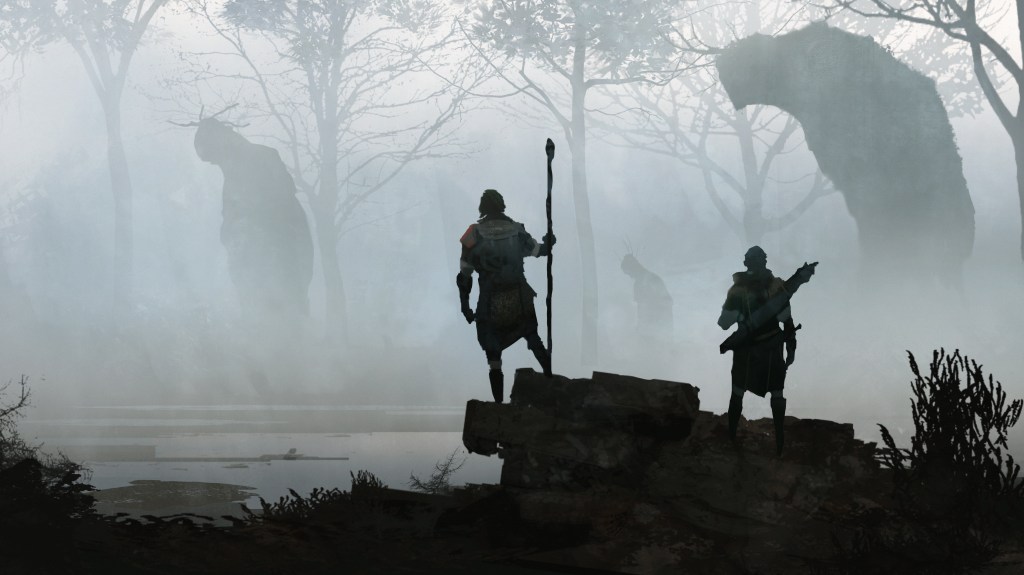
Symbaroum is a setting where the kingdom of Ambria has just won a war against the Dark Lords, but it cost them dearly: their lands all died thanks to the corruption of magic. The entire kingdom up and moved 20 years ago to the area just south of a massive forest called Davokar, displacing the local people (called barbarians, but I call them clansfolk). The forest of Davokar hides the ruins of an ancient kingdom called Symbar, filled with ancient treasures waiting to be found.
Ambrian adventurers of all types have begun diving into the forest, awakening the dark forces within. The elves and clansfolk are openly hostile to these people pillaging and corrupting their lands. In addition, both the Queen and the church of Prios (think catholic church inquisitors) want to get an artifact of great power within the depths of Symbar. However, the Church and the Queen do not see eye to eye and there’s a simmering hostility between various factions within both the Queen’s nobles and the Church.
The setting is rife with many factions (also factions within factions). The corrupting nature of the magic and treasure means that even if you score it big you may get terribly cursed and turn into a raging monster, killing your friends. Players don’t have to just be pillaging adventurers, they could engage with the factions, freelancer detectives or thieves, or monster hunters trying to kill abominations before they kill innocents.
I also want to call out one super neat setting detail: the elder folk. There are goblins, elves, ogres, and trolls in the game, but they’re not your classic Tolkien versions. Just one example: goblins live brief lives, and after around 25 years they wander into the forest and pupate, that is turn into a cocoon. Out of a cocoon emerges an ogre or troll. Elves have similar life stages, and it’s all super cool, and very different from your standard high fantasy.
How do you play?
Symbaroum is a setting where the vibe permeates the mechanics mostly in ability descriptions and the corruption mechanic. Before we get into any of that, let’s first learn how to roll some dice. To do that, we need to understand a few things about characters.
Characters in Symbaroum are made up of 4 primary components:
- Attributes & Derived Attributes – These are your standard ability scores, HP, and AC.
- Traits – PCs have boons & burdens (from the advanced player’s guide) which provide bonuses in special situations. NPCs may have monstrous traits, which can radically change their stat block. I won’t go into these in this article, but I highly advise using them at your table.
- Abilities – These are core features of the character, which have a level of novice, adept and master
- Gear – Equipment is a big thing, especially early on as it can have a dramatic impact on a character’s ability to move, cast magic, or deal damage.
Attributes
Symbaroum foregoes the standard 6 ability scores of D&D for its own 8:
- Accurate: Hand-eye coordination
- Cunning: Wit & Knowledge, common sense & book smarts
- Discrete: Hide, do rogue things
- Persuasive: Convince someone through words, song, looks
- Quick: Reflexes, balance, nimbleness
- Resolute: Resistance to influence (corruption, persuasion)
- Strong: Muscles, constitution
- Vigilant: Perception, awareness
Attributes will start with a range from 5 to 15, and can be upgraded through Abilities (described later). The names are confusing at first. I found the difference between cunning and discreet particularly confusing, as cunning is often about deceit. The book says you can rename these, but I’d highly advise against doing that, as so many abilities mention them so the re-mapping would be painful.
Besides the 8 primary attributes, characters also have 4 secondary statistics:
- Toughness = Strong (never below 10): Aka HP. if reduced to 0, you’re either unconscious or dying.
- Pain Threshold = Strong/2, rounded up: If damage ever beats this value, the incoming attack knocks a character prone.
- Defense = Quick – Armor’s impede value: Aka AC. Determines how hard you are to hit
- Corruption Threshold = Resolute/2, rounded up: If your current corruption is higher than this, you take permanent corruption. Basically, this is when you stop casting spells to avoid really bad things.
Example
Mira is making her first character, Leyla. After character creation, she’s assigned a 7 to strength, a 10 to quick, a 11 to resolute, and is wearing light armor (-2 impede). This means she has 10 toughness, a pain threshold of 4, 8 Defense, and a corruption threshold of 6.
Rolling
With all those attributes out of the way, let’s figure out how to do something with them math rocks.
The core dice mechanic is to do the following:
- State what you’re going to do
- The GM tells you which core attribute to use, and a modifier for the situation.
- The player then rolls. If that roll is equal to or under the modified number, the player succeeds.
- When degree of success is useful: if the player’s total is different from the target number (TN) by less than 5, it’s a mixed success/failure.
Note: There’s a notation used throughout the book if the roll is opposed. In that case the GM uses the NPCs modifier, this is written as [PC Attribute ← NPC Attribute] ex. [Accurate ← Quick]. The NPC modifier is easy to compute: 10 – NPC attribute. So if they have a 12, that’s a -2 modifier, but an 8 would be a +2 modifier. There are many modifiers (including things like a situational +2 called advantage and actual advantage called Favor) but we won’t go into those in this article.
Example
Mira’s character Leyla wants to break into the house of a simple guard, who has something she needs. She first tries to break into the house by picking the latch on the 2nd story window. The GM asks her to roll [Discrete +2] as they explain it’s a dark night and the rain is on Leyla’s side. Leyla has a 13 in Discrete, so she has to roll an 15 or below. Mira rolls and gets a 10, slips in unseen and moves around the house stealthily.

A few rolls later and she found the item she needs, but made a noise alerting the guard. The guard searches around the house for the source of the noise, the GM asks Mira to make a stealth roll of [Discrete ← Vigilant] (this is read as Leyla’s discrete modified by the guard’s vigilant). The guard has an 11 vigilant, which adds a -1 modifier to her roll. Leyla has a Discrete of 13, so she has to roll a 12 or lower. Fortunately, the dice is on her side and she rolls a 2, and escapes from the scene safely.
This example illustrates 2 things, the player rolls to enter the house (a PC action) and the player rolls for the NPC searching for them (an NPC action). The GM almost never rolls in this system, they simply provide modifiers before the roll happens. I say almost as there are some situations that a GM may roll or ask a player to roll on an NPC’s behalf, particularly when an NPC is prone and trying to get up. Situations like this are where the system being taken as guidelines for rulings not rules is important.
Corruption
Now that we know how to roll, let’s talk about the best mechanic in this system. Corruption is the cost of magic. Entire landscapes can be coated in corruption, pointing to the magic that has warped these lands.
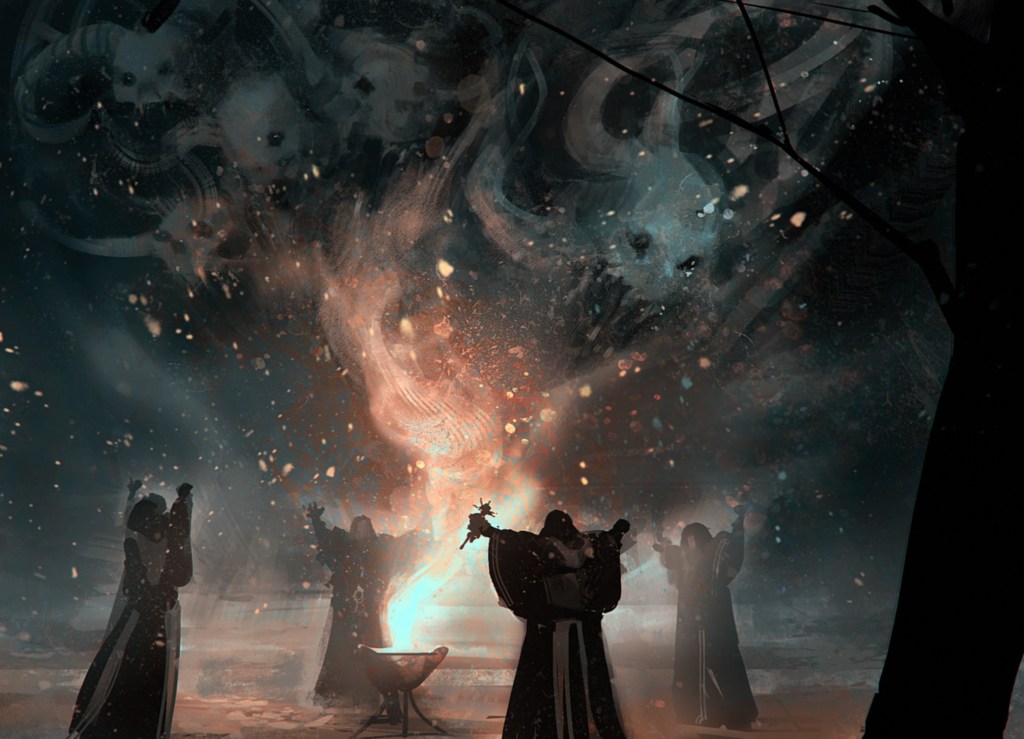
In game mechanics corruption is split into 2 types:
- Temporary corruption: This is corruption that goes away at the end of a scene, and typically is there to act as a limit to the big magic spells.
- Permanent corruption: This is the bad stuff. Once you get permanent corruption, it doesn’t go away (except for niche rituals and powerful artifacts).
If your total corruption ever exceeds your Resolute value, you turn into an abomination. Abominations are a mutated monstrosity that exists only to destroy, your character is forfeit and is likely a problem for your party.
While non-magical folks may encounter corruption when entering corrupted landscapes, touching corrupted artifacts and fighting corrupted abominations, mages have to deal with it for every mystical power they use or learn. In game terms this means you pick up corruption:
- Every time you learn or upgrade a magical power or ritual you take one permanent corruption.
- Every time you use a magical power or ritual you take 1d4 temporary corruption.
With character’s maxing out their Resolute at 15, that means a brand new mage could cap out their corruption threshold (15/2=8) after 2 bad rolls. Plus, if you get corruption for each spell, that’s terrible for a mage. The way they mitigate that is through abilities called Mystic Traditions, which allow you to avoid taking both permanent and temporary corruption, so long as you only take spells of that Tradition (i.e. a Witch can only use Witchcraft spells).
Interestingly, while corruption starts as a major threat at the start of the game, characters (mystics especially) can quickly develop ways to avoid it, especially with higher-level abilities and potions. That said, it remains an ever-present threat that adds to the core vibe of the game.
Example
Leyla knows the spell 'lay on hands' which can cure 1d6 toughness. She's a novice in witchcraft, so she avoided taking the permanent corruption for learning the mystic power. When she tries to cast it Mira, her player, has to roll at or under her resolute score of 11. Succeed or fail, she takes 1d4 temporary corruption when casting which is quite dangerous to her low corruption threshold of 6. If she eventually becomes an adept in witchcraft, she can ensure she only takes 1 corruption when casting.
Combat
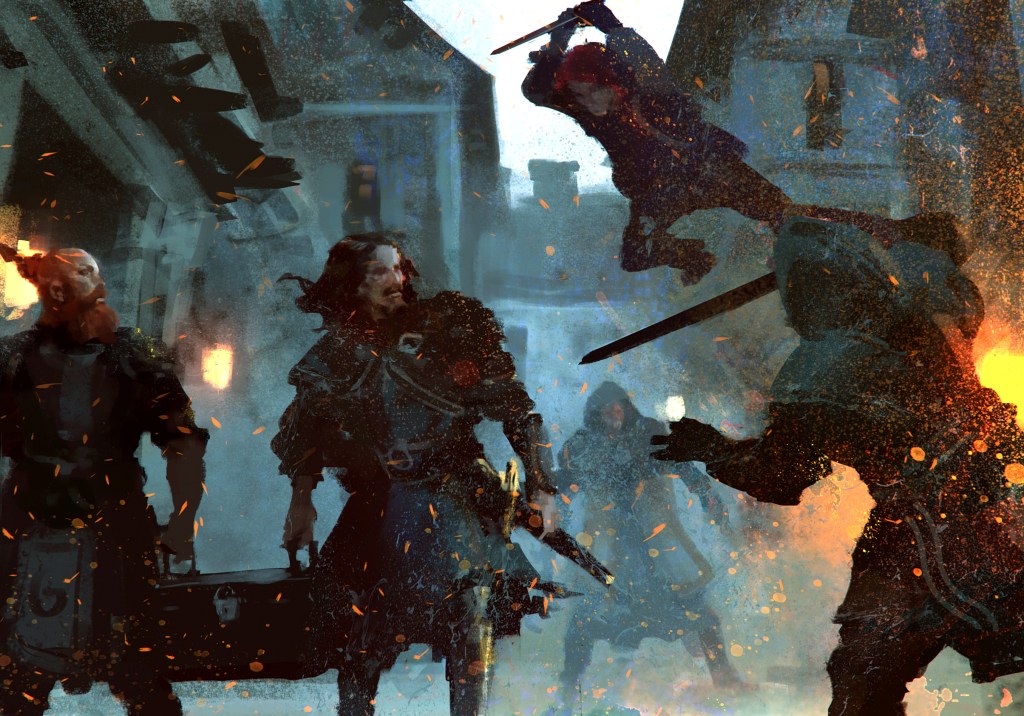
Now that we understand attributes, rolling the dice, let’s talk combat. Combat in Symbaroum is fairly standard in that it’s roll a d20 with modifiers, check if you succeed, roll damage (or armor). It uses a static initiative (determined by your Quick score). On their turns PCs and NPCs get a movement action and a combat action.
The game uses abstract (theater of the mind) movement by default, but has rules for using miniatures if that’s your vibe. Interestingly, the abstracted movement actions cover more than I’m used to seeing with things like ‘move around an enemy’ (for flanking). These have strategic implications, in moving around an enemy will incur an attack of opportunity.
Now to the meat of it, hitting someone with a sword. If you decide to swing your sword, attacks in Symbaroum are resolved thusly:
- Player announces their attack, and the GM provides a modifier based on the defense value of the target.
- Depending on the PC’s Abilities and weapons, the player may use Accurate or something else (i.e. Resolute for magic). They add all relevant modifiers to that Attribute, this is their target number.
- The player rolls their d20 and must roll at or under their target number.
- If successful, the player rolls their weapon’s damage dice and the target takes that damage (see damage below)
Defense is similar, but a player’s armor substitutes for damage:
- GM announces a NPC is attacking and the NPC’s attack modifier (often their Accurate modifier).
- The player then rolls a d20 to try to get under the PC’s Defense value, modified by the attacker’s value.
- If the player succeeds, they dodge or the attack glances off their armor.
- If the player fails, then the attack does damage (see damage below)
So how does taking damage work?
- The defender takes the incoming damage value and subtracts its armor score (NPCs have static armor, a player will roll their armor dice).
- The remaining damage is taken away from your toughness. At 0, you either fall unconscious or begin dying
- If the damage taken is above the defender’s pain threshold then they’re either knocked prone or they get a second attack (player choice for both PCs&NPCs).
Example
Leyla is in a fight trying to hit a bandit with her bow. She’s wearing light armor, which imposes -2 to defense and mystic powers, but not weapon attacks. She has a 11 in Accurate and the bandit has a 12 (-2) defense score. This means she needs to roll a 9 (11-2) or under to hit. Mira, Leyla’s player, rolls the dice and gets a 9, that’s a hit! She then rolls a d8 for her bow’s damage and gets a 5. The bandit has a static 2 armor and thus takes 3 damage.

On the bandit’s turn they run up to Leyla and they swing their great axe. Leyla has a 10 in quick, but thanks to her light armor she has a -2 penalty, making her defense score 8. Mira rolls for Leyla’s defense, and gets a 10. Not going to do it. The bandit’s axe connects, and the GM announces it does 6 damage (NPC damage is static) Mira then rolls a d4 for Leyla’s armor and gets a 1, that means she takes 5 damage, which is above her pain threshold of 4! Mira chooses for Leyla to get knocked to the ground. Things are not looking good.
Dying & Healing
If you drop to 0 toughness, you enter a ‘death save’ loop. If you fail 3 times or roll a nat 20, you die. Otherwise you stay near death till someone saves you or you roll a nat 1.
Healing is fairly slow, only 1 toughness per day. There are herbal cures which give 1 toughness immediately, a medicus (doctor) ability, and magical healing. Damage is an early game problem and with a healer in the party can survive some serious hits.
Abilities & Advancement
So to this point I’ve not mentioned where magic spells come from or how you get some sweet sword tricks. Those are all called Abilities, which are like a leveled ‘feat’ from D&D. They have 3 ranks: novice, adept, master. They all cost 10XP to get a new novice rank, or 20 XP to level up an ability to adept rank or 30 to level it up to master. All told, it costs 60 XP to master an ability. Abilities are mostly combat abilities, but also give access to crafting, magic, and other problem-solving abilities.
I won’t go into the content of the abilities (BUY THE BOOK!) but there’s some great options here to build the dark fantasy hero you want to be. It’s worth mentioning that this is where all the mechanical heft of the system comes from. Abilities, especially spells, add a lot more complexity to the table, but are where a lot of the fun is.
XP is awarded by the GM after an adventure concludes, and the advice is to give 1 XP per scene.
Closing
Hopefully that gives you a taste for Symbaroum, a really cool setting that gives you ‘lightweight dark d20 fantasy.’ I find the system to be a nice, refreshing game with enough mechanical heft in the Abilities and the threat of the Corruption mechanic.
Resources
- Buy the books: [DTRPG, Free League]
- Symbaroum Subreddit
- Online character builder
- Davokar Explorer’s League Discord: has some great resources like this one for awesome chase rules.
- Ordo Magica: fan site with a lot of great content.
 The Witch's Wandering Table
Leave a comment